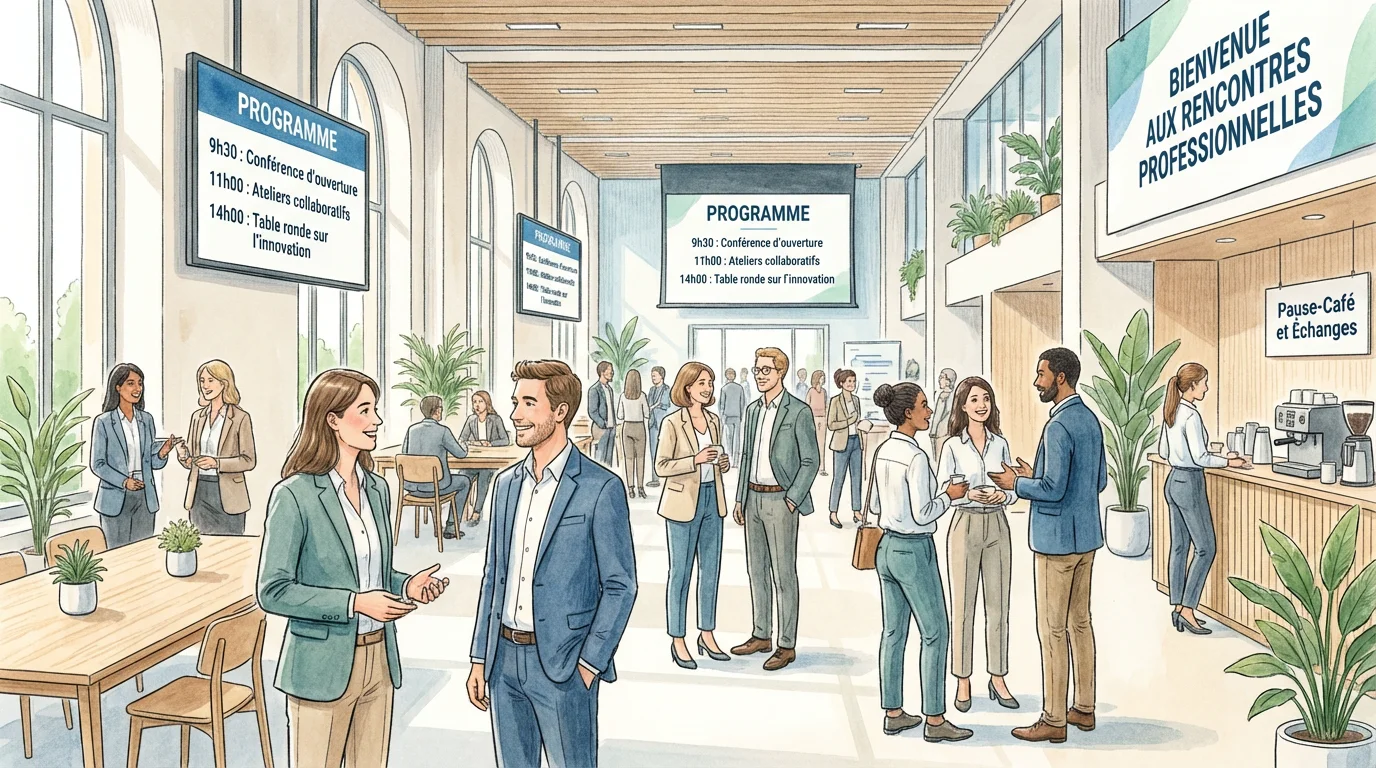
Summary: An event website is essential for promoting your events, selling tickets, and building audience loyalty; in France, the sector generates €32 billion in economic benefits.
In France, 52% of event professionals recorded an increase in turnover in 2025 compared to 2024, with economic benefits reaching €32 billion in mainland France. Simply put, if you organize events (or want to start), the question is no longer whether you need an event website, but rather when you are going to launch it.
And yet, many beginners still hesitate. Where to start? Which features to prioritize? How to stand out from the competition? Don't panic: this article lays the groundwork, without technical jargon, to help you build a site that makes people want to attend your events.
Why an Event Website Has Become Essential
A few years ago, a simple flyer or a social media post might have been enough. That is no longer the case. 91% of B2B marketers now consider physical events to be the most effective tool in their customer acquisition and loyalty strategy. However, these events need a solid digital storefront to convert interest into registrations.
A website dedicated to your events serves several roles at once: it informs, it reassures, it sells tickets, and it collects valuable data about your audience. Unlike a Facebook page or an Instagram profile, you have full control over the user experience, design, and displayed information.
For companies just starting out digitally, it is also a signal of credibility. A visitor who lands on a professional site, with a clear program and a simple registration form, will have much more confidence than with a link to a PDF document sent by email.
Essential Features of a Good Event Website
Are you a beginner, and the list of possible features makes your head spin? Breathe. Here are the truly indispensable elements for a working site, ranked by priority.
A Homepage That Sets the Tone
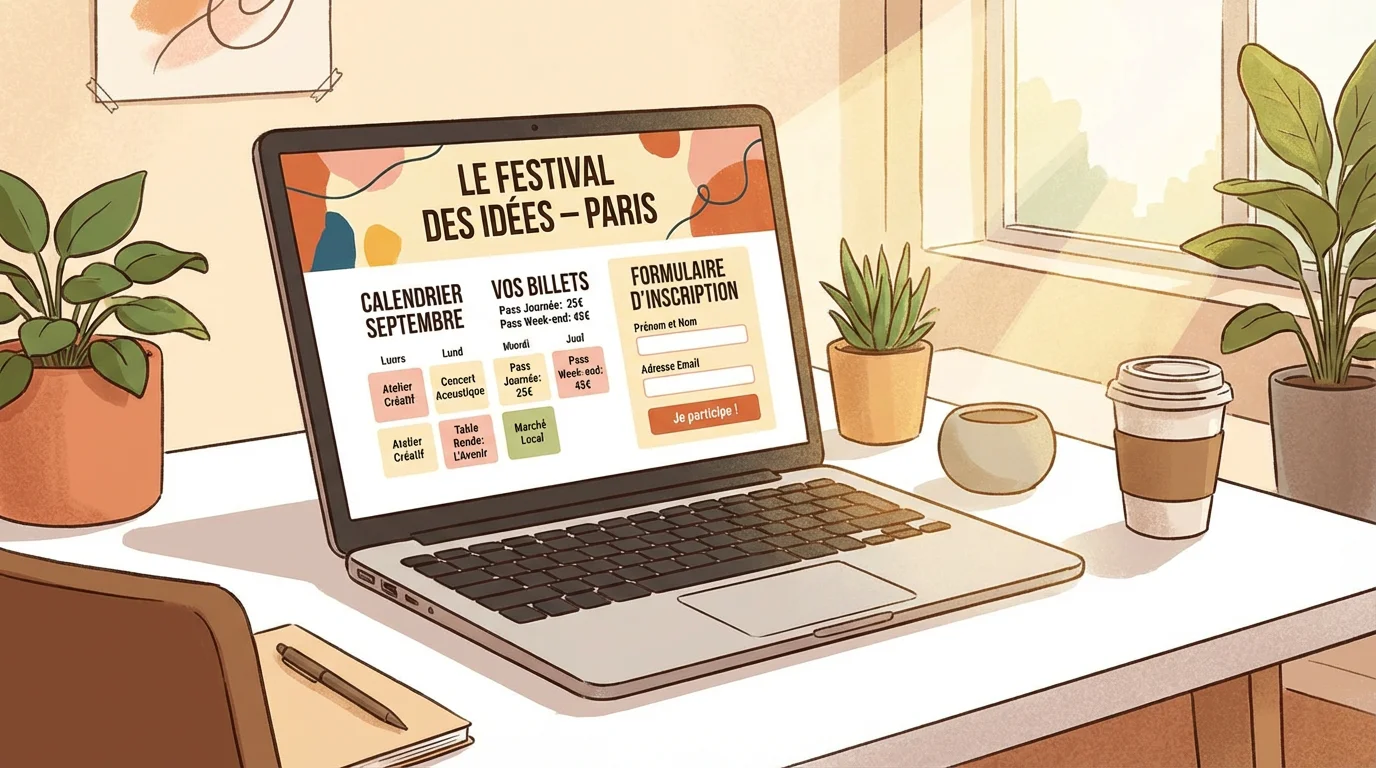
This is your first impression. It must answer three fundamental questions in less than 5 seconds: what (the name and type of event), when (the date and time), and where (the location or connection link if it’s online). A strong image or a teaser video at the top of the page captures attention immediately.
A Detailed and Readable Program
Visitors want to know what to expect. Present the program in time blocks, including speakers' names, themes, and the duration of each session. A well-structured program encourages registration and reduces the number of questions you’ll receive via email.
A Registration or Ticketing System
No event site is complete without a registration form or ticket sales. Ideally, use a customizable form that collects the information you need (name, company, position, dietary preferences, etc.) without being too long. Every unnecessary field is a potential participant dropping out.
An "About" Section and Testimonials
Who is organizing this event? Why? Your "About" page humanizes your project. Add participant testimonials from previous editions. Social proof remains one of the most powerful conversion levers, especially when starting out and brand awareness is still being built.
A Blog or News Section
A blog integrated into your event site boosts your SEO (Search Engine Optimization) and allows you to stay in touch with your audience between editions. Case studies, speaker interviews, behind-the-scenes looks: every article is an opportunity to drive qualified traffic.
Event Website: Build It Yourself or Hire a Pro?
This is THE question every beginner asks. And the honest answer is: it depends on your goals, your budget, and the time you can devote to it.
Online creation platforms (like Wix, WordPress, or specialized ticketing tools) allow you to set up a basic site quickly. This is a valid option for a small, one-off event. However, as soon as you want a custom design, serious SEO optimization, or specific features (CRM integration, multi-event management, secure payment), the limits quickly appear.
Hiring a web agency means investing in a site designed to last, tailored to your brand image, and capable of evolving with your needs. It also saves time: while pros handle the technical side, you focus on organizing your event.
A Booming Event Market in France
French companies' spending on events amounted to €5.5 billion in 2024. This figure confirms a deep-seated trend: companies, large or small, are increasingly betting on events to unite, prospect, and communicate.
2024 was a landmark year for the industry, driven by the momentum of the Olympic and Paralympic Games, with 100 million international visitors welcomed in France, according to the Event Data Book 2025 published by UNIMEV. In other words, the playground is expanding for everyone who wants to get into events.
The global B2B event market shows a compound annual growth rate of 8.5% between 2024 and 2030. France, with its internationally recognized network of event venues, is well-positioned to capture a share of this growth. In this context, a well-designed website is your best asset to attract participants.
Common Mistakes to Avoid When Starting Out
Creating a site for your event is exciting. But a few classic traps can turn the experience into a headache. Here are the ones we see most often.
- Neglecting the Mobile Experience: More than half of web traffic in France comes from smartphones. If your site is not responsive (adapted to mobile screens), you lose visitors before they even read your program.
- Forgetting SEO Basics: A beautiful site that no one finds on Google is a lost investment. Work on your page titles, meta tags, loading speed, and URL structure.
- Overloading Pages with Information: When you are passionate about your event, you want to say everything. Resist the temptation. An effective event site gets straight to the point: key info first, details later.
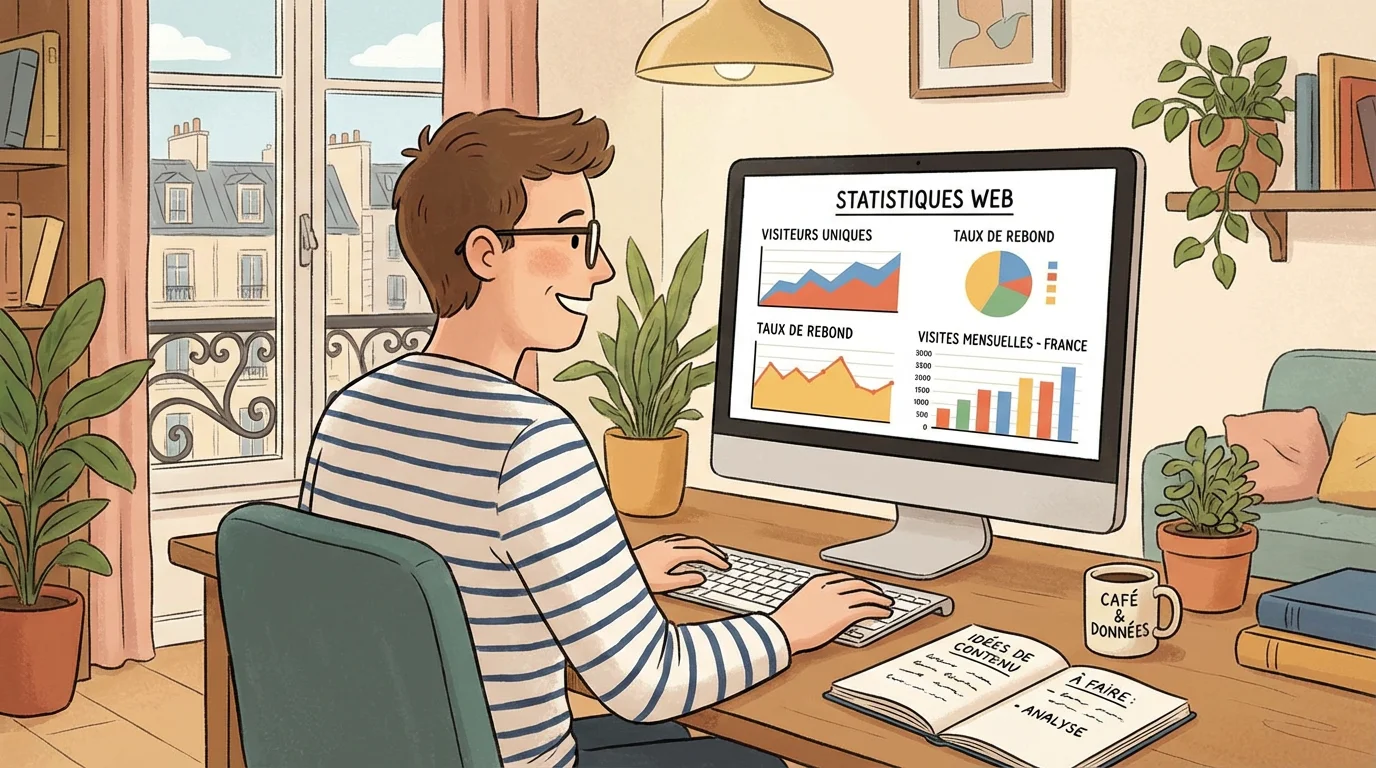
- Ignoring Data Tracking: Install a traffic analysis tool from the launch. Knowing how many people visit your site and where they drop out allows you to adjust your strategy in real-time.
2025 Trends: What’s Changing for Event Sites
The event sector is evolving fast, and your site must keep up. Hybrid formats (mixing in-person and digital) represent 45% of event formats in 2025, compared to 28% in 2023. Your site must therefore be able to handle both physical registrations and online access.
Artificial Intelligence is also making its way into event design. Personalized journeys, chatbots to answer participant questions, and session recommendations based on interests: these tools are no longer reserved for large corporations. Integrating these features gives you a head start.
How to Properly Prepare Your Event Site Project
Before jumping into creation, take the time to lay the foundations. Here is a simple 5-step method:
- Define your objectives: Are you selling tickets? Collecting free registrations? Looking for sponsors?
- Identify your target audience: A site for a music festival doesn't look like a site for a professional congress.
- List necessary content: Program, speakers, practical info (access, accommodation, FAQ), visuals, videos.
- Choose your tools: CMS, ticketing, email solution, analytics tool.
- Set a schedule: Ideally, your site should be online at least 2 to 3 months before the event.
Getting Support as a Beginner: A Truly Great Idea
Let’s be honest: creating a website when it’s not your job is time-consuming. In the event industry, time is a rare resource. Between logistics, communication, and managing vendors, adding "learning web design" to the list can quickly become discouraging.
This is why professional support makes all the difference. You don't need to speak HTML to have a high-performing event website.
Frequently Asked Questions
How much does it cost to create an event website? The price varies greatly depending on complexity: from a few hundred euros for a basic site on an online tool to several thousand for a custom site.
Do I need technical skills to manage an event site? No, not necessarily. Modern CMS platforms allow you to modify content (text, images, program) without touching the code.
When should the site go live relative to the event? Ideally 2 to 3 months before the event date to allow SEO to take effect and for communication campaigns to roll out.